How Music Changes Learning

Music can provoke deep emotions while taking us back in time. Given this trajectory, it also has the power to help us learn and retain information. Emotions and learning go hand-in-hand. Maya Angelou stated, “At the end of the day, people won’t remember what you said or did; they will remember how you made them feel.”
This is how good teachers become great. They know how to connect music with the daily lives of their students.
Effective teachers use music to help their students engage, have fun, and remember new concepts and information. Music helps learning stick and is even more powerful and beneficial to the brain when students are involved in musical activities.
Did you know that we are all born with more neurons than we need? Typically, by the time we are 8 years-old, our brains do a major neuron dump, and it removes any neurons perceived as unnecessary. This is the reason why it is easier to teach language and music to younger children. “If you learn music as a child, your brain becomes designed for music,” Sugaya states.
Listening is good. Playing and engaging in music is even better.

Music is Universal
Music has played a critical role in every human culture—both past and present. Because it is universal, people around the world respond to its magic in similar ways. Music is unique because it is a language that can be enjoyed and appreciated by people from all walks of life. It can transcend barriers and bring people together, which is why it is often a critical tool for learning, communication, art, and expression. Music has the power to evoke strong emotions, which can create deep personal connections to certain songs or genres. Additionally, music can be enjoyed alone or with others, making it a versatile and accessible form of entertainment that almost everyone can relate to in some way.
In addition, music can create robust emotional responses and even change the brain’s physical structure. Overall, music has a powerful and multifaceted effect on the brain and can improve various cognitive and emotional functions.
5 Ways Music Improves Learning
Memory and Retaining Information
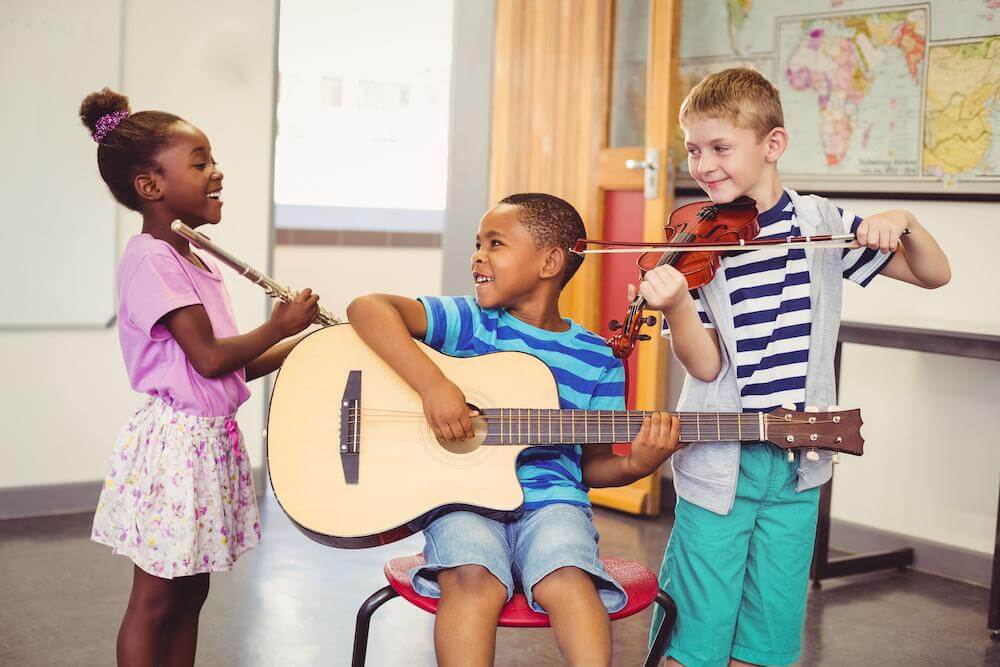
Music can help to improve memory and retention. When we listen to music, our brain releases dopamine, a chemical that helps to increase our “good” feelings. These positive feelings can help us memorize or recall information more easily. The primary way music helps us retain information is by engaging in the parts of the brain responsible for memory and learning. While reaching the brain in the right areas, music can help to improve mood and focus—which can help us pay attention better while retaining information more effectively. Music can also help create a conducive learning environment, reduce stress and anxiety, and improve our ability to memorize important information, experiences, lessons learned, or stories.
Focus and Concentration
Music can improve concentration and focus. Listening to music helps you concentrate and focus on tasks that require mental effort. This technique can be beneficial while studying or working on a challenging project. Music can also block distractions and create a conducive learning environment, which helps with staying on task.
Stress Reduction
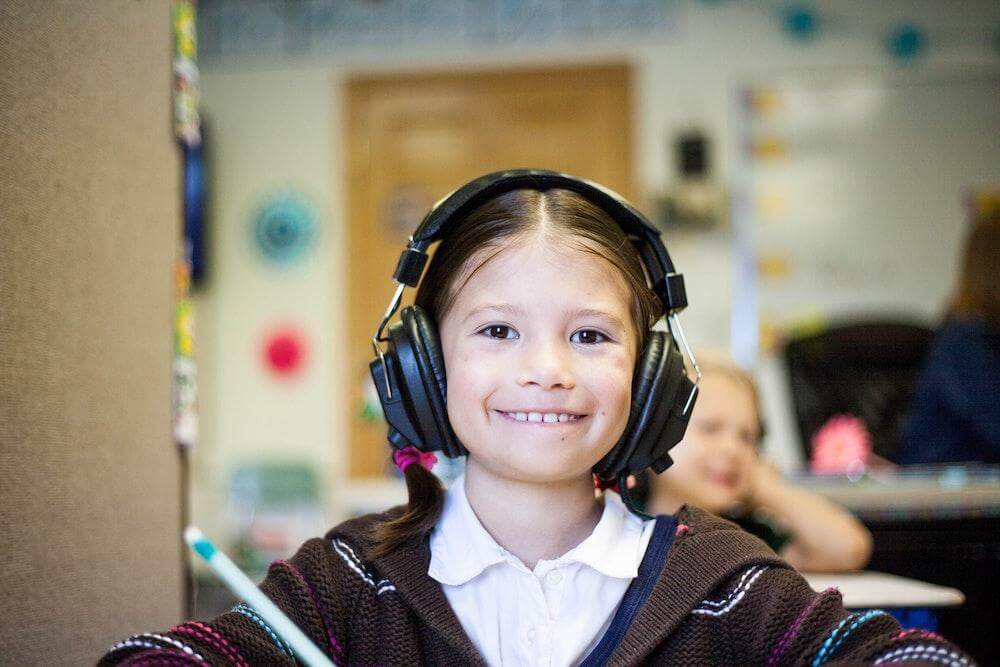
According to The University of Nevada, “Music can help to reduce stress and anxiety. Listening to music can have a calming effect on the mind and body. Also, since music improves our focus, learning and retaining information is more manageable, as stress and anxiety can interfere with the learning process. It can also influence one’s mood, and affect cognitive performance. Research has shown that most students who listen to music while working claim it helps them manage stress and anxiety.
Faster music can make you feel more alert and concentrate better. Upbeat music can make you feel more optimistic about life. A slower tempo can quiet your mind and relax your muscles, making you feel soothed while releasing the stress of the day. Music is effective for relaxation and stress management.”
Motivation and Positive Learning Spaces
Music can help to improve motivation and engagement. Many people find that listening to music helps improve their mood, which can help them learn and retain information. Music can make you feel more engaged and interested in the learning process.
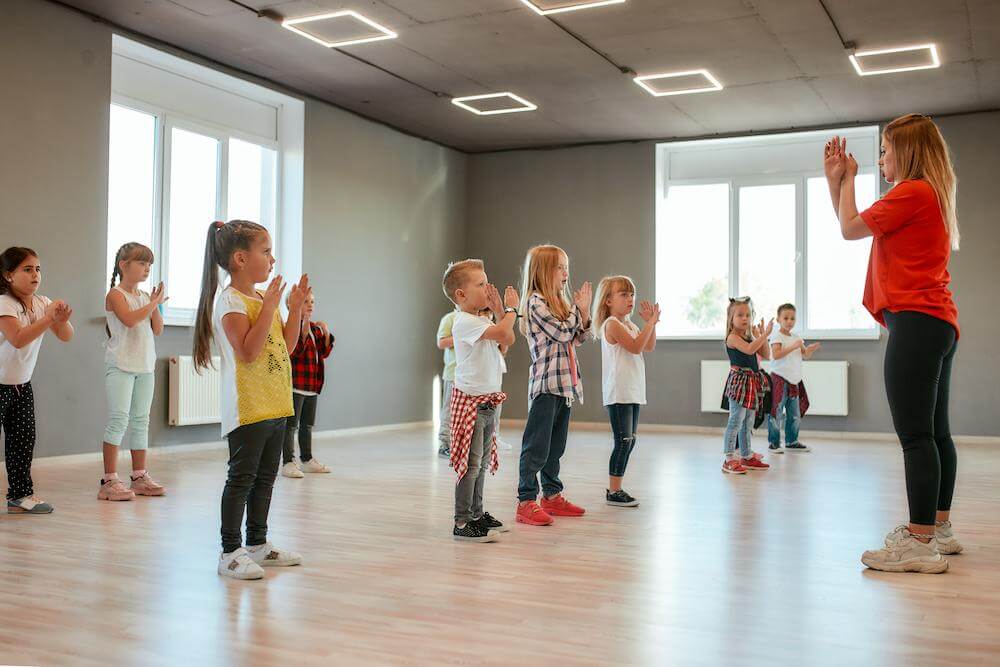
Add in some dancing and movement, and you have a class to remember.
Creativity
Music can enhance creativity and problem-solving skills. The structure and organization of musical compositions can inspire students to think outside the box, and find creative solutions to problems.
Learning and Emerging Bilingual Learners
Music can play a significant role in an ESL or Bilingual classroom. Singing songs for academic learning is a fantastic way to help students to acquire a new language. Singing also improves memory and makes learning fun, engaging, and effective. Lastly, music is an incredible tool for teaching due to its ability to connect the cultures and languages of students, regardless of age and cultural background.
Teacher Tips
One of the more significant issues we all face — whether teaching English to children or adults, is maintaining learners’ interest throughout our lessons. Therefore, as educators, we often have to be creative in the techniques we use to get our messages across for real learning that stays with the students. What makes music such a great teaching tool is its universal appeal, connecting all cultures and languages.
Music is one of the best and most motivating resources in the classroom, regardless of age or background of the learner.
One of the more significant issues we all face — whether teaching English to children or adults, is maintaining learners’ interest throughout our lessons. Therefore, as educators, we often have to be creative in our techniques to get our messages across for authentic learning that stays with the students. What makes music such a great teaching tool is its universal appeal, connecting all cultures and languages.
Music is one of the best and most motivating resources in the classroom, regardless of the age or background of the learner.
Tom McFadden, Science teacher and the founder of Science With Tom, shares some of his top tips for teaching through music.
McFadden states, “There are tradeoffs to whether songs are written by students, teachers, or 3rd party organizations like Flocabulary or Science With Tom. Student-written songs are obviously the best for the depth of student learning, but they take a lot of time. They can solidify incorrect information if there isn’t a robust process for outlining, fact-checking, and editing.
When it comes to students making their own educational songs, student choice is key. This should be one of several creative options to show their learning.
For teachers who are short on time, there are many ways to use existing science music videos on YouTube. You can have students remix a song, make their own video, explain lyrics, do karaoke, or write a second verse.
In trying to meet the needs of students and teachers, I am more and more excited about the concept of ‘rhymequizzes’ which use music and rhyming to both teach and assess. Teachers can check out my collection here at rhymewit.com.”