Absent Without Leave: America’s Traditional K-12 Learners are Leaving, Costing Schools Hundreds of Millions in Their Wake
By Charles Sosnik
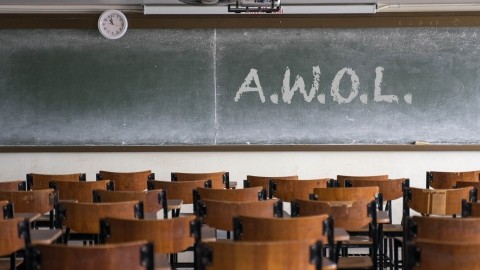
Our traditional K-12 students are begging out of attendance at record numbers, often with no notification whatsoever. It’s a trend that began years ago, but has accelerated at blinding speed since the start of the COVID-19 pandemic. In 2019, 27 percent of America’s learners chose alternatives to traditional public schooling including charter schools (6 percent), private schools (10 percent), and homeschool or unaccounted for (11 percent). In 2020, the latest figures from Learning Counsel research now show that 33.6 percent of American school-aged children no longer attend traditional public schooling. Currently, 7 percent are in charters, 11 percent are in private schools and a skyrocketing 16 percent are in homeschooling or unaccounted for.
2020 saw a landslide of change in school attendance with the average additional defection (to any alternative) away from traditional public schooling now at 3.6 percent per district. Many districts are experiencing much more. The estimate of 33.6 percent of students nationwide now opted out across the three alternatives (charter, private or homeschool) is very conservative. This is because qualitative analysis of district enrollment loss includes expectations by many that students will come back after the pandemic, making their current figures of 5-15 percent losses appear to be a temporary situation. Also, many say that in the upper grades (10 – 12) they see large numbers of drop-outs due to family income needs, particularly in low-income and minority areas where older students have had to get jobs or care for younger siblings, getting so far behind that their hopes of graduation have become nonexistent.
In a time when future financial concerns are causing districts enormous worry, enrollment loss is taking a big bite out of their funding here in the present. Although no national data is yet available, snapshots of state and local data show a very ugly picture.
In Georgia, enrollment in kindergarten has dropped 11 percent this year, which is expected to cost the state $100 million in funding. In an interview with WABA.org, Stephen Owens, a senior policy analyst at the Georgia Budget and Policy Institute said, “If you lose five students in a classroom, you can’t turn down the heat by five students. You can’t fire one-twentieth of a teacher. If you’ve had several years of flat or declining enrollments, then you can start building out multiyear budgets accordingly,” he said. “But as it stands with one large hit, especially as you are increasing costs due to the pandemic, it can have consequences for several years in the future.”
Data has begun to come in from almost every state, and results mark the same trend:
In Massachusetts, data shows enrollment in public schools is down 37,000, about 4 percent from last year. In an interview with the Boston Globe, Glenn Koocher, executive director of the Massachusetts Association of School Committees said, “This situation is unique in so many ways. I suspect there are kids who are not going to school — they are at home, they can’t log in, and are in limbo.”
In New York City, schools have already lost more than 31,000 students compared to last year, or 3.4 percent of the district’s total enrollment. According to Chalkbeat, “The city’s most affluent schools, where 20 percent or fewer students are low income, saw enrollment drop by 12 percent, a loss of about 2,800 students. At schools where more than 80 percent of students are from low-income families, enrollment dropped 4 percent.”
In North Carolina, data from the first month of the 2020 Fall semester indicate a 5 percent drop in average daily attendance in public schools from the previous school year. Many districts are showing much higher loss, like Guilford County Schools which previously had 72,000 students but is now down 16 percent.
In Montana, Billings Public Schools will see a drop of $365,000 in state funding this year based on budget projections, as 450 students switched to home schooling. Fall enrollment showed 16,527 students, compared to 17,000-plus last year. That includes a 596-student drop in K-8. According to superintendent Greg Upham in an interview with the Billings Gazette, “That could mean a $2 million loss next school year compared to projected enrollment levels.”
In Iowa, Rapid City Area Schools projected a 13,500 enrollment for the 2020-21 school year, but actual figures show 12,690 students in K-12. Superintendent Lori Simon estimates the enrollment decline may cost the school district as much as $5.1 million.
As the pandemic drags on and parents become increasingly comfortable with homeschool alternatives, expect the trend of lost traditional public-school attendance to continue. On the consumer side, high quality courseware with stunning graphics and the best user experience money can buy continue to be a strong draw. Plus, parents feel a level of safety with their children at home that schools have a hard time matching. Even with all the benefits offered by the traditional school experience, a lack of perceived safety is hard to overcome. So, what’s the answer?
Schools need to invest in the best available courseware with consumer-grade graphics and a gee-wiz user experience. Also, avoid the tendency to stick with whole group, synchronous learning. Take advantage of everything that online learning has to offer. Now is a great time to loosen the reins and let kids explore independently. No one wants to spend four or more hours a day in ZOOM or Meet or Teams. I don’t. You don’t. And your kids don’t have the patience for it. Instead, make learning an adventure. Schools are in a unique position to compete with the homeschool market and win. And make no mistake, it is a competition right now. But the good news is, it is a competition you can win. And if you win, our kids win.
About the author
Charles Sosnik is an education journalist and editor and serves as Editor in Chief at the Learning Counsel. An EP3 Education Fellow, he uses his deep roots in the education community to add context to the education narrative. Charles is a frequent writer and columnist for some of the most influential media in education, including the Learning Counsel, EdNews Daily, EdTech Digest and edCircuit. Unabashedly Southern, Charles likes to say he is an editor by trade and Southern by the Grace of God.