How To Teach English & Science Together
Did you know?
According to the IDRA, there are currently 1 million emergent bilingual students enrolled in Texas public schools. Texas educates the highest percentage of emergent bilinguals in the United States. 28% of all Texas students between Pre-K and 3rd-grade are emergent bilingual students.
ESL, Bilingual, and Multilingual teachers have a challenging task when teaching English and academic content together. Depending on your school district’s structure and resources, you can find different educational scenarios set up for this type of learning.
For example, mainstream teachers can work with English support staff within the classroom as a push-in model, or the student may be part of the regular academic courses if his or her English skills are high enough. Sometimes, students leave their ESL or Bilingual classrooms for certain academic studies depending upon how much academic language they’ve acquired.
In other situations, you can find ESL and Bilingual teachers who work with students to cover both social and academic language as well as content—this is more of a “whole student” approach. Depending upon their English levels, students may have to learn academic content through their ESL or Bilingual teachers.
One of the most engaging academic fields to teach English is Science.
Why Science?

Science is wondrous and fun—which can help emerging bilingual learners to grasp new words and concepts. Students can apply ideas, theories, and the Science phenomenon they learn during school so it aligns with their lives outside the classroom. Science is everywhere, and that is why it is also a compelling topic to teach alongside English.
Also, integrating an academic subject while teaching English can help teachers save precious time in the classroom.
Emerging bilingual learners can thrive in an environment that promotes critical thinking, problem-solving, verbal exchanges, debate, experiments, hands-on activities, and working together.
Here are 7 Tips for Teaching English & Science
Background Knowledge: Before learning can begin, regardless of the academic subject, every educator must know a bit about their students’ backgrounds. To provide the most successful lessons to ensure the best outcomes, teachers should learn about their students’ worlds—including their English and academic levels, along with their native language skills, culture, and traditions.
When teachers have this knowledge, they can create lessons that align with the student’s natural world. Students will also have more buy-in to school when they know their language and culture are valued.
If you can connect their language to the content, they will likely remember it and remember you!
Through different non-formal and formal assessments, teachers can understand how much a student knows about a particular subject. Science is a great way to pull in both social and academic language learning because it provides real-world activities in which students can relate.
Encourage Communication: It’s important to remember that every ESL or emerging bilingual learner is at a different stage regarding their English levels, which can lead to hesitancy in the classroom. Most students have a silent period before they are comfortable talking in any language when it comes to being in front of their peers for fear of making mistakes.
Teachers need to remember that their students will speak when they are comfortable and ready. Create an environment that encourages talking in small steps. For example, set your students up with a reliable buddy or start class discussions in small groups. An effective teacher should be able to assess a learner’s language English levels in both a non-formal and formal setting. A quiet classroom is not conducive to learning a new language. However, the environment matters and it must be a good fit for all students.

Use Science-Based Resources & Accommodations as Needed: Make sure to use academic vocabulary words, along with visual pictures, and have many vocabulary word walls for students to refer to when they can’t recall a term or phrase. These visuals around the classroom will help students remember English better because they see the terms and images daily.
Most students can understand images regardless of language. Ensure your resources are hands-on, encourage engagement, and align lessons with your specific state standards. Have students draw pictures to accompany their written notes, and include images in all the content you want students to read. Reading science-themed articles or stories can help emerging bilingual learners improve their reading comprehension, increase English fluency, and grasp new English vocabulary words while also learning about Science. You can use easy readers and short books for the younger grades to accommodate and scaffold your teaching. You can also use science textbooks, videos, virtual field trips, and simulations as a framework to encourage speaking, writing and reading.
Offer Science Experiments: Different science experiments are a great way to learn academic and non-academic language. Because students have some authority over their investigations, it can be a fun way to engage emerging bilingual students while teaching Science concepts and building their language skills.
Offer Science experiments that encourage critical thinking, debate, and presentations. Scaffold your lessons appropriately, so they challenge students just enough to move them to another level. Scale back if you find you’re moving too fast. Conducting simple experiments such as building a volcano can be a strategic way to teach basic Science concepts.
For more great articles, videos, job postings, and even our podcast—be sure to visit our website, and follow our page!
Share Engaging & Short Science Videos: Watching videos about different Science topics can be another valuable way to engage emerging bilingual students—while helping them improve their listening and comprehension skills. Offer videos that encourage quick feedback, and promote discussion and debate—these strategies can help students learn English while using critical thinking skills in Science.
Provide videos on topics your students can bring into their world because this can significantly help them to connect the learning bridge from school to home.

According to Total Care Therapy, the average attention span in 2023 is currently 8.25 seconds. Be sure to keep videos short, so you don’t lose their attention.
Writing: Data has repeatedly shown that when emerging bilingual learners take state language proficiency exams, they tend to struggle the most on the writing part of the exam.
Find ways to get students writing daily—whether through an opening question of the day, journaling about a Science project, or taking notes in class alone or with a writing buddy. Writing can work in many different formats for every student. It is imperative to find Science topics that interest your students so they feel inspired to practice writing. Almost any topic in Science is relatable to the real world, and as an educator, you can find what works for each student. This process can be a significant task, but with the right tools and support, all emergent bilingual learners can also be successful writers in Science and other content areas.
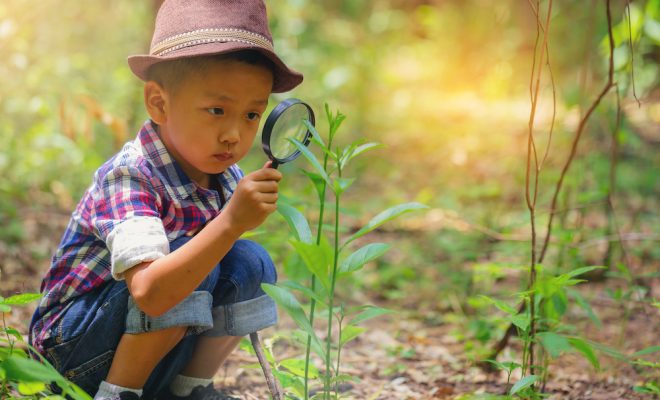
Get Out into the Real World: Take students on field trips or take them outside to learn about Science. If you can’t take your students on real-world field trips, offer virtual science field trips, simulations, and engaging Science activities.
Taking emerging bilingual students on field trips to Science museums, State parks, or zoos can be a great way to teach them about Science while allowing them to practice their social and language skills in a real-world setting. Whether you use authentic life trips or virtual Science simulations, these trips can be a great way to engage students who may not be as interested in traditional classroom lessons.

Integrating Science into ESL and Bilingual classrooms can be an ideal way to engage students while helping them learn English in parallel. By conducting Science experiments, using science-based resources and materials, watching videos, creating projects, and taking students on field trips—ESL, Bilingual, and Multilingual teachers can create the best environment to ensure students not only succeed, but thrive.
My name is Robyn D. Shulman. I’m a writer, editor, educator and the Growth Marketing Manager for Summit K12 – where we empower learners and support teachers in the ESL/Bilingual and Dual Language Field. In 2018, I won LinkedIn’s Top Voice, and I’m a former contributor to Forbes, where I covered education and entrepreneurship.
Please follow me, click the bell on my profile to subscribe to my updates, visit our page, and please share this newsletter with those would benefit.