EdNews Daily

Top Menu

  • 2020 Tech Resources
  • About
  • Activity
  • Add Listing
  • Archive 3 Col Full Width
  • Archive 4 Col Full Width
  • Articles
  • Author
  • Bark-Free 7 Day Trial
  • Blog Classic Style
  • Blog List Style
  • blogging
  • Book: How I Changed My Career Path
  • Checkout
  • Checkout
  • Checkout Here
    • Purchase Confirmation
    • Purchase History
    • Transaction Failed
  • Confirm Subscription
  • Contact Us
  • Coupons for College Students
  • Deals
  • Directory
  • Disclosure
  • ED Tech Interviews
  • EdTech Company Sign-Up Page
  • Edtech Consulting
  • EdTech Consulting and Advising
  • EdTech Meetings: Book Appointment
  • Education Coupons
  • Education Freelance Jobs
  • Education Partnerships
  • Education Public Relations
  • Education TED Talks
  • Educators Sign Up
  • for me
  • Forum
  • Grants & Contests
  • Groups
  • Hire ESL Teachers
  • Home
  • Home Page
  • Home variation 3
  • Home variation 4
  • Home variation 5
  • Home variation 6
  • Home variation 7
  • Home variation 8
  • Homeschool Resources
  • Info
  • Job Board
  • Job Dashboard
  • Jobs
  • Jobs for Teachers
  • Latest Education News
  • Layout Columns
  • Layout Columns Full Width
  • Learning LinkedIn Community
  • LinkedIn Coach
  • LinkedIn For High School & College Students
  • LinkedIn For Teachers
  • Listing Preview
  • Listing Success
  • Location
  • Logging In
  • Login
  • Lost Password
  • Media Packages
  • Members
  • Monthly Contest
  • News
  • Our Partners
  • Pages
    • Full Width Page
  • PlayBuzz Fun Teacher Quizzes
  • Podcast
  • Policies and Reviews
  • Post a Job
  • Privacy Policy
  • Purchase Confirmation
  • Reaching Teachers: Partnership Inquiry
  • Recent Activity
  • Recent Activity
  • Recent Activity
  • Recent Activity
  • Recover Password
  • Register
  • Site Registration
  • Sitemap
  • Submit Site
  • Teach English Online
  • Teacher Book Entry Form
  • Teacher Profile Form
  • test
  • test
  • Test Forum
  • Upcoming Promotions
  • User Profile
  • What Grade Should You Teach?
  • World Teachers’ Day 2019
  • About Robyn
  • Redirect
  • Shortcodes
    • Icons
    • Typography
    • Pricing Tables
  • Alternatives to Teaching

Main Menu

  • Home Page
  • Digital Learning
  • ESL and Bilingual
  • How Learning Works
  • Innovation
  • Science
  • Technology
  • Learning Futures

logo

EdNews Daily

  • Home Page
  • Digital Learning
  • ESL and Bilingual
  • How Learning Works
  • Innovation
  • Science
  • Technology
  • Learning Futures
Technology
Home›Technology›Take Another Look at Financial Literacy for Our Youth

Take Another Look at Financial Literacy for Our Youth
By Charles Sosnik
May 20, 2022
1289
1

Do Something Awesome; Share With A Friend Who May Benefit

Share on LinkedInShare on FacebookShare on X (Twitter)Share on PinterestShare on Email

By Christy S. Martin, Ed.D.

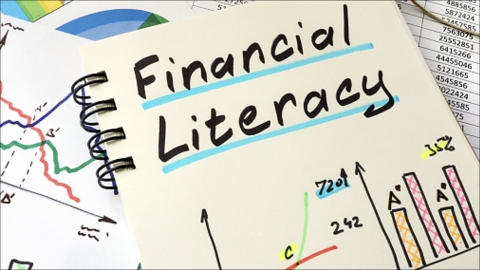
Financial Literacy is a subject that is currently little taught, but much needed in our schools. With the advent of digital transactions and the inability of school age children to see the relation to money and goods, the financial knowledge imbedded in life activities has been lost to many of our current generation. A model being piloted in Tennessee seeks to help insert some of the money smarts of previous generations into a newly developed curriculum called Money Week.

This curriculum, developed by educators and partnered by the University of Tennessee Extension and the Tennessee Financial Literacy Commission, is being piloted now in 6 schools and is expected to expand to twenty schools next year. Early reviews of the program show promising results. The curriculum is for grades one and two and has as its components activities like counting money, reading a book called ‘You Can’t Buy a Dinosaur with a Dime,’ making a money box to include spots for save, spend, and give, and parent newsletters with activities to emphasize money activities to do at home with children. Students are also being gifted the Mercer Mayer book, ‘Just Saving My Money.’

In one school, teachers are expanding the curriculum to fifth grade STEM classrooms to include writing a budget and lots of hands-on lessons to reinforce financial literacy. Tennessee, like many other states, requires one half credit course in Personal Finance, but many feel those lessons are too little too late. The program is being endorsed by the University of Tennessee with the school’s president participating in the activities along with state legislators and others who hope this program will become a nationwide model.

The basics of not only personal finance, but an understanding of the way money works, is crucial in today’s world. For example, people should not be surprised that we have rampant inflation. It is simple economics. If you place several trillion dollars in the economy with nothing to back it, the existing money supply will be worth less – hence, it will take more of this money to buy the same goods and services. The fact that we now have rampant inflation is actually a good sign that the economy is working the way it is supposed to. And while unpleasant, an understanding of monetary principles would suggest that inflation is the logical conclusion of infusing money into the economy.

For those who work with older youth who have grown up in the digital age, programs like this may provide the link to money and goods and services as well as financial value. Money is, after all, what moves the world and as educators, we must utilize the opportunities to link any aspect of practical living that we can to our youth who will soon be challenged with living in a world that does not provide that visual or tactile link. Finances are infused into everything we do, and being financially literate is part of good citizenry. I am hoping for this model and others like it take hold.


About the author

Christy Martin recently retired after more than 35 years as an educator K-12 and post-secondary as well as several years as a coordinator of programs for youth aging out of foster care. She writes about what she knows from experiences in education and social services. Christy welcomes comments on her articles. Communicate with her via email at ccsmartin@hotmail.com. She can also be found on Christy Martin | Facebook, Christy S. Martin (@ChristySMartin1) / Twitter, and (4) Christy Martin, Ed.D. | LinkedIn.

This article was originally published by The Learning Counsel, a research institute and news media hub focused on providing context for the shift in education to digital curriculum.

TagsFinancial Literacy
Previous Article

Hybrid Learning and Lesson Design: 5 Tips ...

Next Article

Experience Hybrid Logistics at ISTE

Related articles More from author

  • Featuredprofessional developmentTechnology

    The Best Holiday Gifts for Teachers: A Story

    December 14, 2021
    By Charles Sosnik
  • Education NewsFeaturedTechnology

    New Executives Appointed to GG4L Leadership Team

    November 15, 2021
    By Charles Sosnik
  • FeaturedTechnology

    Emotional Intelligence: The Smarter Path to High Achievement

    January 15, 2021
    By Charles Sosnik
  • DigitalDigital LearningFeaturedTechnology

    Beyond the Science Experiment: Building Soft Skills with AR and VR

    January 7, 2020
    By Charles Sosnik
  • book
    Education NewsOp-EdTechnology

    ’Booking’ Students: The Literacy Solution

    December 4, 2016
    By Robyn Shulman
  • FeaturedHow Learning WorksTechnology

    Hybrid Learning and Lesson Design: 5 Tips for Efficiency

    May 13, 2022
    By Charles Sosnik
© Copyright 2011-2026, EdNews Daily. All rights reserved.