
The Advice Project: The Most Important Educational Project for Young Women in the World Today.

Imagine a world where someone works with inner city teen girls, where no subject is taboo, where they dig deeply and write about subjects that matter to them, where an educator not only listens, but guides, mentors, challenges, cares. And such an educator not only has a wealth of experience, but brings in powerful global voices as illustrations. Can you imagine the impact this type of educational experience has on these teen girls, who often live (and suffer) in silence? Well, it is life-changing.
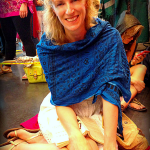
Such is the case with NYC-based global educator Melissa Banigan, who does all of the above (and more) with The Advice Project. It is the most important educational project for young women in the world today.
We caught up with Melissa to ask about her work with teens, how to educate and empower young women, international education, and more. Here’s what she had to say…
First – please tell us about the Advice Project…
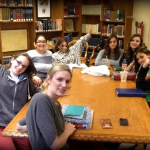
The Advice Project is an organization that offers free (donation-based) media, writing, and empowerment workshops and classes for teen girls and women living in New York City. All of our programs are built around the idea that teens and young women are misrepresented by society and in the media, which means their voices are left out of discussions about topics that affect their lives. The primary goal of The Advice Project is to inform participants of the policies and realities behind global issues, have them examine their own views, and then amplify those views by teaching them how to write powerful op-eds, essays, and reflective pieces )such as ‘Dear Me’ letters), and then get those pieces published and read by as wide an audience as possible.
The Advice Project is built around a simple, replicable, method: girls are taught to hone in on a problem, and then partner it – always – with a solution. It’s been a very successful way to empower girls and women, and because it can work anywhere, within any group of people, I’m currently planning international train-the-trainer programs in Cameroon, Kenya, Uganda, Peru, and in cities across the United States so that other women, teen, and family-focused organizations can benefit from what we’re doing.
A lot of our international programming is unfolding organically, as I’ve been working closely with women around the world who are leading exciting feminist initiatives. In the summer of 2013, I started editing a book, Advice to My Thirteen Year Old Self, which is a collection of advice letters written by 50 women to their teen selves. These letters formed the earliest curriculum for The Advice Project – first of all, the authors, a bevy of global explorers, writers, conservationists, race car drivers, scientists, and teachers – are leaders in their prospective fields. Second, their advice is always built around the ‘problem partnered with solution’ approach, which means that their words offer real guidance that can be applied to real-world situations.
Early on, I saw that the letters in Advice to My Thirteen Year Old Self were making a huge impact on young readers, and that the stories – written by women from over 30 countries – were creating bridges between cultures. For example, first-hand stories recounting things such as breast ironing, female genital mutilation, and rape really serve to illuminate how they are culturally supported practices, which in turn can help readers focus on what they can do to affect change both in their own communities and globally.
How do your writing workshops help empower teen girls?
Oftentimes, girls and women are allowed to air grievances about issues that affect them, but aren’t allowed to help create solutions. This means, for example, that when girls and women have been subjected to sexual harassment or sexual crimes, they are told to go to police or “trusted adults,” who often sweep the complaints under the rug. Giving girls and women the tools to be able to come up with their own solutions and sharing them widely really is empowering.
Also, discussing topics that are typically “taboo” for teens (rape, sex, gender-based war crimes, cutting and suicide, abortion, etc.) is important. Teens are savvy, and we must treat them with respect. We allow them to go to war, to marry, and to have sex, but then we’re not allowed to talk about these things? What a strange double standard. The Advice Project believes that knowledge is power. We also believe that including teens and youth in traditionally “adult” conversations makes them better advocates for their own bodies, decisions, and ultimately, their futures.
What do teens gain from working with the Advice Project?
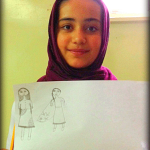
The Advice Project is sensitive to the fact that no two communities are alike, and that there are certain topics that we simply can’t discuss. One organization we’ve worked with, for example, that assists women and children immigrants from Afghanistan, told us that talking about sex and changing bodies during workshops was prohibited. Therefore, we needed to come up with some creative ways to talk about ownership of our bodies. We examined the roles of women in the media, how and who controls their images, and what that meant for the girls in the room. We could practically see the light bulbs turning on over each of the girls’ heads, and the end result was that although we had circumnavigated any talk of the body, every single participant walked away with new idea of what it means to take ownership of one.
Girls and women who work with The Advice Project learn the importance of their ideas, and they learn how and where to use them for good. Because we spend a lot of time examining stereotypes, the girls also become better members of their local communities and more open-minded global citizens.
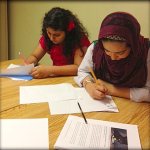
Also – regardless of writing ability – each girl walks away with a piece of writing she can be proud of. We’ve worked with teens performing at college level, and immigrants who were, until recently, prohibited from learning how to read and write in either their native language or in English. Watching girls open their minds and hearts through the written word is truly remarkable, and is what keeps me forging ahead with The Advice Project.
Let’s talk international education – and your global summit for teens in Peru next summer…
This whole idea of bridge-building between cultures is something I feel strongly about. Therefore, I’ve launched our first international leadership and empowerment summit for teen girls and youth leaders. The 2015 Advice Project Global Leadership and Empowerment Summit for Teen Girls will take place in Peruvian rainforest. For two weeks, girls from all around the world will come together to focus on “big picture” problems such as the rights of indigenous women, conservation and climate change, and the sexual trafficking of girls. Participants will be tasked with coming up with applicable solutions to these problems – exciting, world-changing stuff.
The Advice Project plans to lead one global summit per year for teen girls, and is dedicated to getting their solutions published, read, and hopefully applied, by magazines, newspapers, and people around the world.

Bio: Jessie Voigts has a PhD in International Education, has lived and worked in Japan and London, and traveled around the world. She’s published six books about travel and intercultural learning, with more on the way. She is constantly looking for ways to increase intercultural understanding, and is passionate about inspiring people to travel through Wandering Educators, a travel library for people curious about the world. She founded and directs the Youth Travel Blogging Mentorship Program, teaching teens all around the world.


